In the digital age, SMS (Short Message Service) remains a crucial part of communication technology, especially in technologically advanced countries like South Korea. This blog aims to explore the nuances of SMS encoding within South Korea, understanding how it impacts both daily communications and business interactions.
What is SMS Encoding?
SMS encoding refers to the method by which text characters are packed into binary data to be sent over the mobile network. The encoding determines how many characters can be included in a single message and which characters are available. In essence, it’s the backbone that supports the text messaging function on your mobile device.
The Evolution of SMS Encoding
Initially, SMS was primarily based on the GSM (Global System for Mobile Communications) standard, which uses 7-bit encoding. This format allows up to 160 characters in a single message. If more characters are needed, the message is split into multiple segments, known as concatenated SMS.
However, for languages with more complex characters, like Korean, 7-bit GSM encoding is insufficient. Korean characters require a more robust encoding system due to their complexity and variety.
Korean Language and Its Encoding Challenges
Korean uses the Hangul alphabet, which consists of 14 consonants and 10 vowels that combine to form syllables. Each syllable is written in a block-like shape, which can represent a combination of two to five letters. This structural complexity necessitates a different encoding approach.
How SMS Encoding Works in South Korea
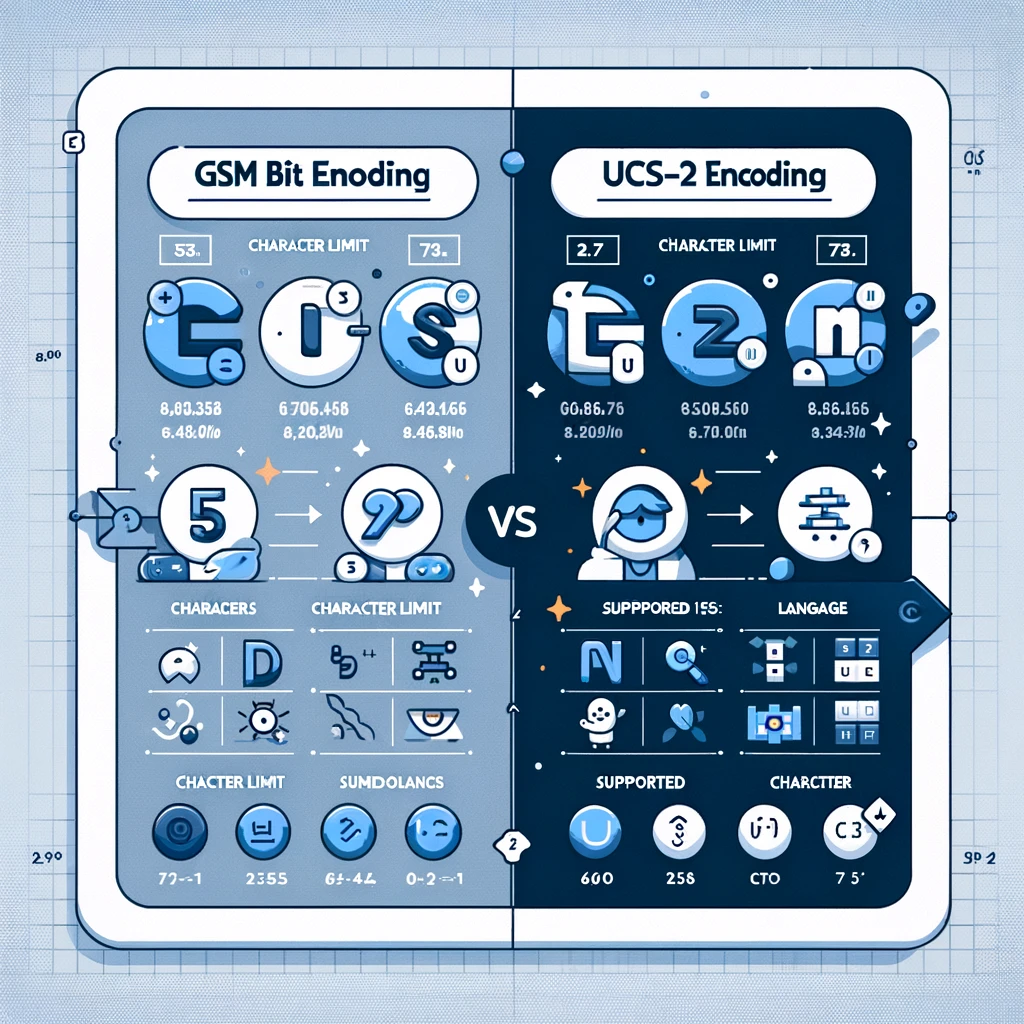
In South Korea, the primary encoding standard for SMS is UCS-2 (Universal Character Set – 2 Byte). UCS-2 allows for the encoding of text in multiple languages due to its ability to represent over 65,000 unique symbols or characters using two bytes (16 bits) per character.
However, the use of UCS-2 encoding reduces the maximum number of characters per SMS. In a standard single segment SMS, only 70 characters can be included instead of the 160 characters allowed by 7-bit encoding.
Impact on Users and Businesses
For everyday users, the understanding of SMS encoding might not seem critical until they encounter issues like truncated messages or unexpected splitting of messages into multiple parts. This can lead to confusion and miscommunication.
For businesses, especially those in marketing and customer service, understanding and effectively managing SMS encoding is crucial. Mismanaged SMS campaigns can result in poor customer experience and increased costs due to multiple segmented messages.

Best Practices for Managing SMS Encoding
- Character Count Awareness: Always be aware of the character limits when sending SMS messages. This is crucial in avoiding unexpected costs and ensuring message quality.
- Pre-testing Messages: It is wise for businesses to pre-test their messages on various devices and networks to ensure that they appear as intended.
- Utilizing SMS Service Providers: Many businesses opt to use professional SMS service providers who can manage the complexities of SMS encoding and ensure that messages are delivered accurately across different networks and devices.
Conclusion
As South Korea continues to be a leader in telecommunications, understanding the specifics of SMS encoding becomes increasingly important. Whether for personal use or corporate communication strategies, a thorough grasp of SMS encoding standards ensures effective and efficient communication. Remember, in the realm of SMS, every character counts.